
Enterprise Data Platforms in insurance: Building the foundation for scalable operations and AI
Why Enterprise Data Platforms have become a strategic priority
Over the past few years, insurers have invested heavily in digital transformation initiatives. New underwriting platforms have been introduced, claims workflows have evolved, analytics capabilities have expanded, and AI has quickly become part of the conversation across the industry.
Despite this progress, many organisations still face the same operational limitations. Data remains distributed across multiple systems, reporting processes continue to rely on reconciliation, and introducing new capabilities often creates additional complexity rather than reducing it.
This is why Enterprise Data Platforms (EDPs) are becoming an increasingly important topic across insurance.
Not because organisations suddenly need more data, but because they need a more structured way to manage, connect, and operationalise the data they already have.
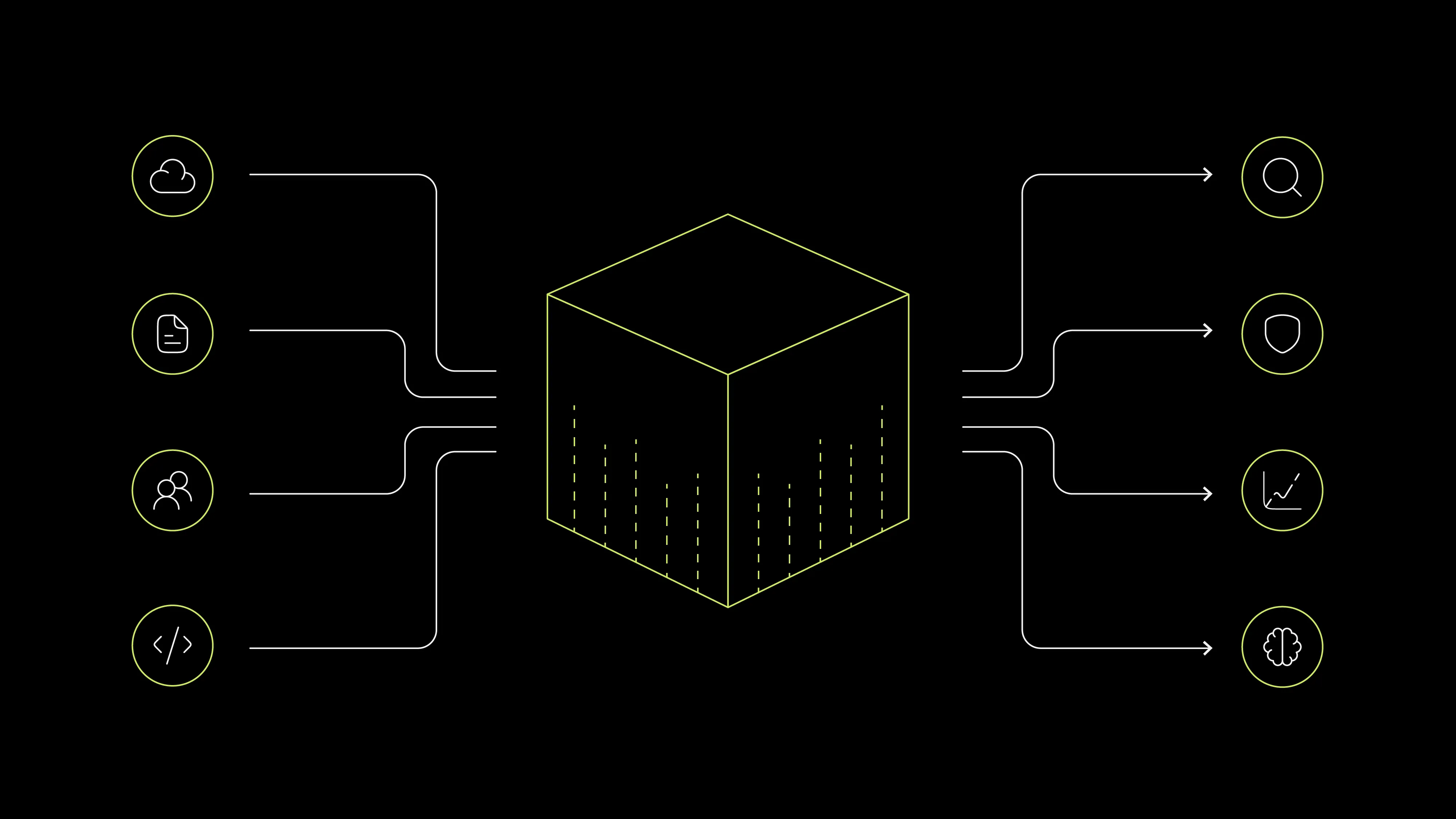
At its core, an Enterprise Data Platform provides a unified foundation that brings together data from across the organisation into a consistent, governed, and accessible environment. Rather than existing in isolated systems and workflows, data becomes part of a shared operational layer that can support underwriting, claims, reporting, analytics, and user-focused AI initiatives simultaneously.
For insurers dealing with fragmented technology landscapes, growing regulatory pressure, and increasing expectations around speed and customer experience, this shift is becoming less of a technical improvement and more of an operational requirement.
Moving beyond disconnected systems
Most insurers operate within a complex ecosystem of platforms and processes that have evolved over many years. Underwriting workbenches, policy administration systems, claims platforms, finance systems, broker portals, and third-party data providers all play important roles within day-to-day operations.
The problem is not that these systems exist. The problem is that they rarely operate within a unified data structure.
As information moves between systems, inconsistencies begin to emerge. Definitions differ between teams, formats vary between platforms, and data often needs to be manually validated or reconciled before it can be used reliably. Even organisations with mature integration layers frequently struggle with alignment at the data level.
This creates operational friction across the business. Underwriters and brokers spend time gathering and validating information instead of focusing on risk evaluation. McKinsey previously estimated that commercial lines underwriters spend between 30% and 40% of their time on administrative tasks such as rekeying data and manually executing analyses rather than actual underwriting work.
Claims teams face similar challenges when information is spread across disconnected systems or trapped inside unstructured documents, emails, and attachments. Reporting processes become resource-intensive because data must be consolidated and validated before it can be trusted.
An EDP addresses this by creating a centralised but flexible data environment where information from across the organisation can be standardised, governed, and made usable across functions. Instead of data being tightly coupled to individual systems, it becomes accessible as part of a broader operational foundation.
What an Enterprise Data Platform actually does
One of the reasons EDPs are often misunderstood is because they are frequently described as a single product or technology. In reality, an Enterprise Data Platform is an architectural approach rather than a standalone tool.
It combines multiple capabilities that work together across the data lifecycle.
At the ingestion layer, the platform connects to internal systems, external data providers, APIs, documents, emails, and other structured or unstructured sources. Technologies such as Apache Kafka, Azure Data Factory, Informatica, and Fivetran are commonly used to support this process.
The storage layer provides a scalable environment for managing both structured and unstructured data. Depending on the organisation’s architecture, this may involve platforms such as Snowflake, Databricks, Azure Data Lake, Amazon Redshift, or Google BigQuery.
From there, data processing and transformation layers standardise formats, apply business logic, and prepare information for operational and analytical use cases. Governance and quality controls ensure that data remains trustworthy, traceable, and compliant with regulatory expectations.
Finally, analytics, reporting, APIs, and generative AI capabilities sit on top of this foundation, allowing data to flow into dashboards, operational workflows, customer-facing applications, and decision-support systems.
The value of the platform does not come from any individual technology within the stack. It comes from creating a consistent and governed flow of data across the organisation.
Creating operational value, not just visibility
One of the biggest misconceptions around data platforms is that they primarily exist to improve reporting. While reporting and analytics are important outcomes, the operational impact is often far more significant.
When data becomes accessible and consistent across systems, underwriting workflows become more efficient because relevant information is available at the point of decision-making. Claims handling becomes less dependent on manual intervention and data gathering. Regulatory reporting becomes easier to automate and audit.
At the same time, organisations gain greater flexibility when introducing new products, onboarding partners, or expanding into new distribution channels.
This is particularly important as insurers continue to modernise their operating models. Embedded insurance, ecosystem partnerships, and digital-first customer interactions all depend on the ability to move data reliably between systems and stakeholders.
Without a strong underlying data foundation, these initiatives become difficult to scale.
Why EDPs matter for AI adoption and acceleration
The growing focus on generative and agentic AI has increased interest in Enterprise Data Platforms because AI effectiveness is directly linked to data maturity.
Many insurers are already experimenting with operational AI-driven use cases, including document extraction, claims triage, fraud detection, underwriting support, and natural language querying of operational data. However, scaling these capabilities requires access to reliable, well-structured, and governed information.
Deloitte’s 2025 insurance research found that while many insurers are actively investing in generative AI, a large proportion still remain in the proof-of-concept stage when it comes to enterprise-scale adoption. A lack of consistent data governance and integration continues to be one of the main barriers to scaling these initiatives effectively.
This is where an EDP becomes critical.
With the right foundation in place, AI systems can access data consistently across operational environments rather than relying on isolated datasets or manually prepared inputs. Unstructured information from emails, PDFs, bordereaux, and claims documents can be ingested and transformed automatically. AI agents can trigger workflows, generate summaries, support decisions, and surface insights in real time.
Some insurers are already demonstrating what this looks like in practice. UK insurer Aviva deployed more than 80 AI models across its claims operations, reducing liability assessment time for complex cases by 23 days, improving claims routing accuracy by 30%, and reducing customer complaints by 65%.
What makes examples like this significant is not simply the use of AI itself, but the operational environment supporting it. AI becomes substantially more effective when it is built on top of structured, governed, and operationally accessible data.
Building an EDP as a long-term capability
Implementing an Enterprise Data Platform is not a short-term technology project. It is an organisational capability that evolves over time.
Successful approaches tend to focus on practical business outcomes first, rather than attempting to redesign the entire architecture upfront. Many insurers begin with targeted use cases tied to underwriting, claims, reporting, or operational automation, then expand the platform incrementally as adoption grows.
Governance also plays a central role. Establishing ownership, quality standards, and consistent definitions early helps ensure that the platform remains scalable as additional systems and use cases are introduced.
Just as importantly, EDPs work best when they are treated as operational infrastructure rather than isolated IT initiatives. Their value comes from enabling the business to operate more consistently, efficiently, and intelligently across functions.
Building the foundation for what comes next
As insurers continue to modernise operations and expand their use of AI, the importance of structured, accessible, and operationally usable data will only increase.
Enterprise Data Platforms are emerging as the foundation that makes this possible. Not because they eliminate complexity entirely, but because they provide a structured way to manage it.
For organisations looking to improve efficiency, support scalable AI adoption, and create more adaptable operating models, the question is no longer whether an EDP is relevant, but how to implement one in a way that delivers measurable operational value over time.
Stay tuned
In an upcoming whitepaper, we will explore in greater detail how insurers are applying AI across the insurance lifecycle, from brokerage to renewals to operational workflows, customer engagement, and decision support, and why the success of those initiatives increasingly depends on the maturity of the underlying data environment.