Vega IT at ITC Vegas 2026: Bringing AI into everyday insurance operations
My colleague Bojan Tadic and I attended ITC Vegas 2026, joining insurance leaders and technology specialists to explore how the industry is putting new technology into practice.
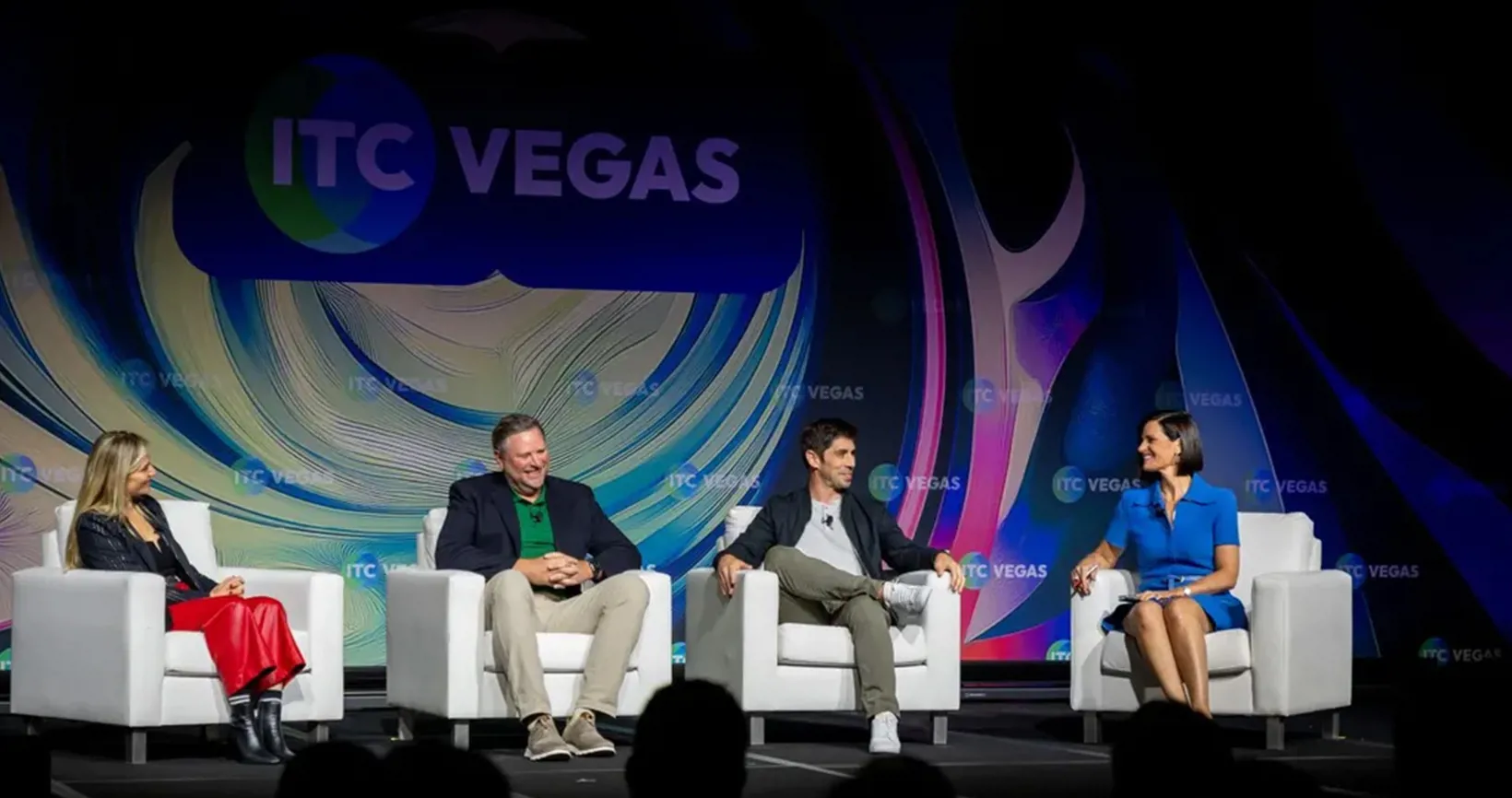
The conference brought together insurers, reinsurers, brokers, insurtech businesses, investors, and technology providers. Its programme spanned underwriting, claims, fraud, cybersecurity, distribution, commercial and specialty insurance, as well as life, health, and benefits.
For us at Vega IT, the themes raised an important question: how can insurers turn advances in technology into improvements that underwriters, claims teams, brokers, and customers experience every day?
Across the AI and modernisation sessions, the emphasis was on practical adoption, such as choosing useful applications, connecting them to existing systems, measuring their impact, and keeping people in control.
These are some key conclusions from the programme and their implications for insurance organisations.
Moving AI from pilots into production
A successful demonstration is an important first step. Putting that capability into a live insurance workflow requires much more.
The AWS panel “The Agentic Insurer – From AI Ambition to Action” explored how insurers select use cases, assess whether a proof of concept is ready for production, and make the transition into operational use.
For insurers, that transition means working through practical questions. Can the solution access reliable information? Does it fit the way teams already work? Who handles exceptions? How will its performance be monitored?
Our conclusion is that production readiness needs to shape the project from the beginning. A pilot should test a clear business problem and the assumptions behind the proposed solution, with a defined path towards integration, adoption, and measurable results.
Agentic AI changes how work moves through the business
Agentic AI has implications beyond individual tasks. As agents take on more steps within a process, insurers need to consider how work passes between systems, teams, and decision-makers.
In underwriting, that could involve gathering submission information, identifying missing data, supporting risk assessment, and coordinating the next action. Hexaware’s “The Agentic Underwriter” session put the underwriting lifecycle at the centre of this discussion.
The opportunity depends on how well those activities connect. An agent that extracts information still needs somewhere reliable to send it. An automated recommendation needs a clear route for review. A workflow spanning several organisations needs agreed responsibilities and consistent data exchange.
This makes architecture, integration, and process design central to agentic AI adoption. Insurers need to decide where agents can act, where approval is required, and how their teams will oversee the work.
Underwriting speed starts with removing friction
Underwriting speed depends on more than the final decision. Delays can build up while teams gather information, re-enter data, move between applications, or wait for calculations.
Removing those delays gives underwriters more time to assess risk and helps brokers receive a more responsive service. The AWS underwriting programme explored this relationship between faster processing, increased capacity, and the continued importance of human expertise.
The practical lesson is to identify the steps that slow the process down and measure improvements at that level. Calculation time, submission handling time, manual handoffs, and rework can all provide useful indicators.
Those improvements should then be assessed against the wider workflow. A faster calculation creates value only when the surrounding process lets teams use the result sooner.
Human oversight needs to be part of the workflow
Claims automation brings questions of accountability into sharp focus. Faster processing needs to work alongside clear controls over decisions that affect policyholders.
Assured’s session on AI safety and governance in claims addressed this challenge directly. Human oversight also featured in the AWS programme, including examples of agents supporting underwriting and claims professionals while people retained control over critical decisions.
For us, the implication is practical: oversight needs to be built into the solution. Teams need clear escalation routes, visibility into the information used, and records that allow decisions to be reviewed.
The same principle applies to voice AI and claims intake. Capturing information efficiently is useful, but the workflow also needs to support quality checks, exceptions, and timely handover to a person.
Modernisation can progress alongside new capabilities
Existing core systems remain essential to insurance operations. Improving them requires careful decisions about continuity, dependencies, and delivery risk.
The AWS programme explored both legacy modernisation and introducing AI capabilities without making a complete data transformation a prerequisite.
Our conclusion is that insurers should assess where focused changes can deliver value while broader modernisation continues. Connecting systems, improving access to information, and replacing specific manual steps can create a practical route forward.
The starting point should be a business constraint: what is slowing the organisation down, and what needs to change to resolve it?
Where Vega IT steps in
At Vega IT, we help insurance organisations translate the priorities mentioned above into working software. Our teams combine insurance domain knowledge with software engineering, system integration, and AI expertise to address the processes behind underwriting, claims, and customer service.
That can mean developing an underwriting workbench, connecting broker-facing platforms to existing systems, improving calculation performance, or introducing AI into a workflow with clear human review points.
For organisations exploring agentic AI, we help identify suitable use cases, define the architecture and controls, and build the integrations needed for operational use.
For those modernising existing platforms, we support incremental delivery around the systems their business depends on. We act as a wrapper around such systems, adding new capabilities and connecting workflows to deliver these incremental improvements without a full rip and replace.
The work starts with a specific problem and an agreed measure of success. From there, we work alongside internal teams to build, validate, and introduce the capability into daily operations.
Looking to improve an insurance workflow or move an AI use case into production? Talk to our team about the systems, processes, and outcomes you need to connect.