
5 reasons why we keep bringing up these topics
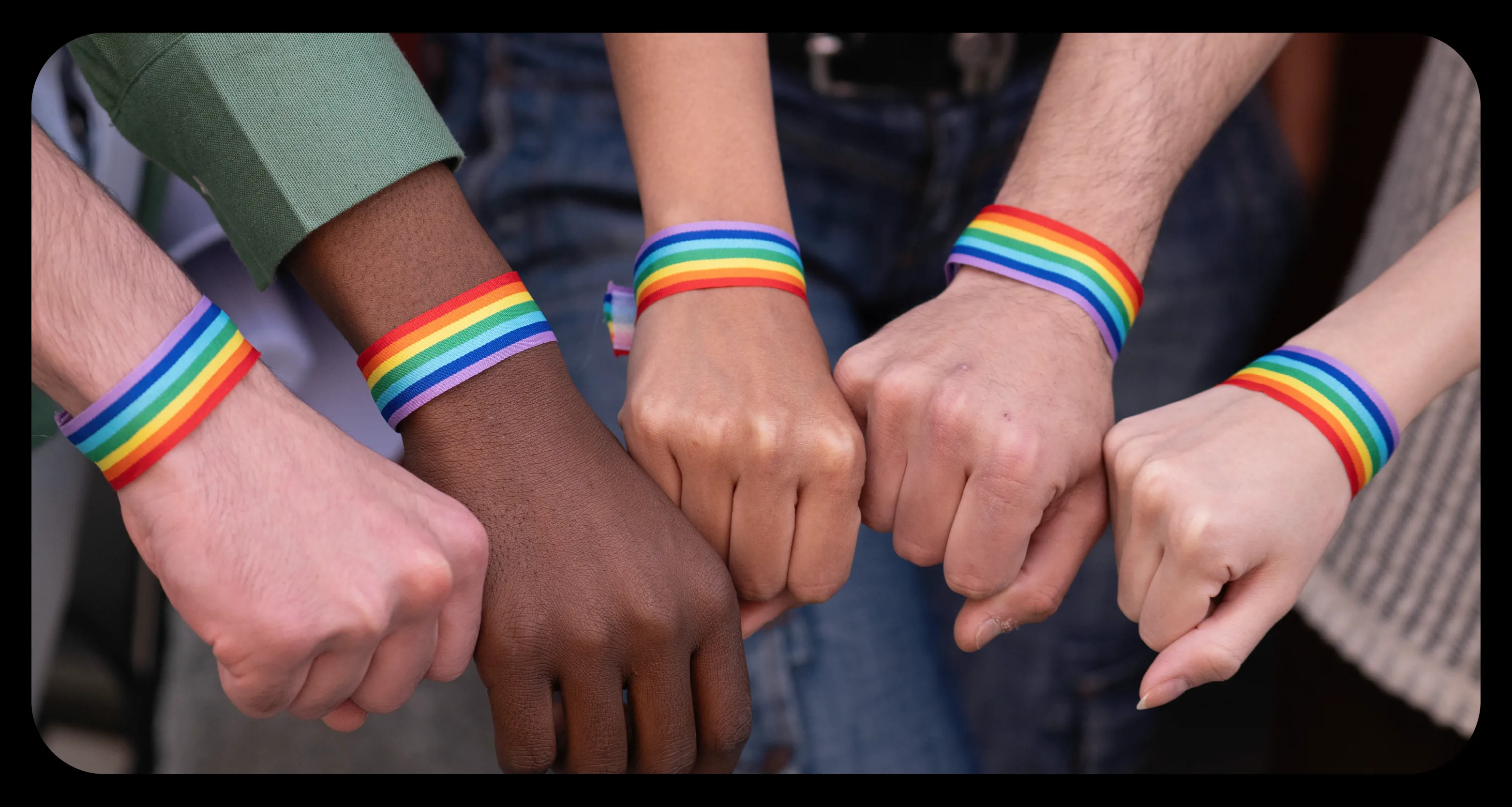
As a DEI Manager, I’m often asked: "Haven’t we talked about this enough already?" The short answer is – no, we haven't. Not as long as basic human rights aren't equally accessible to everyone. Not as long as our colleagues choose to stay silent about their personal lives out of fear, rather than a genuine desire for privacy. And certainly not as long as the morning news brings headlines and reports of new attacks. Our work is far from over.
In our company, we believe that inclusion isn't a project with a deadline.
It’s the very foundation of how we build our workspace. That’s why I sat down with Aleksa Savić, the director of "IZAĐI" – one of the leading LGBT+ organizations in Serbia and the region. Together, we wanted to unpack why this topic must remain on the agenda, both in society and within companies.
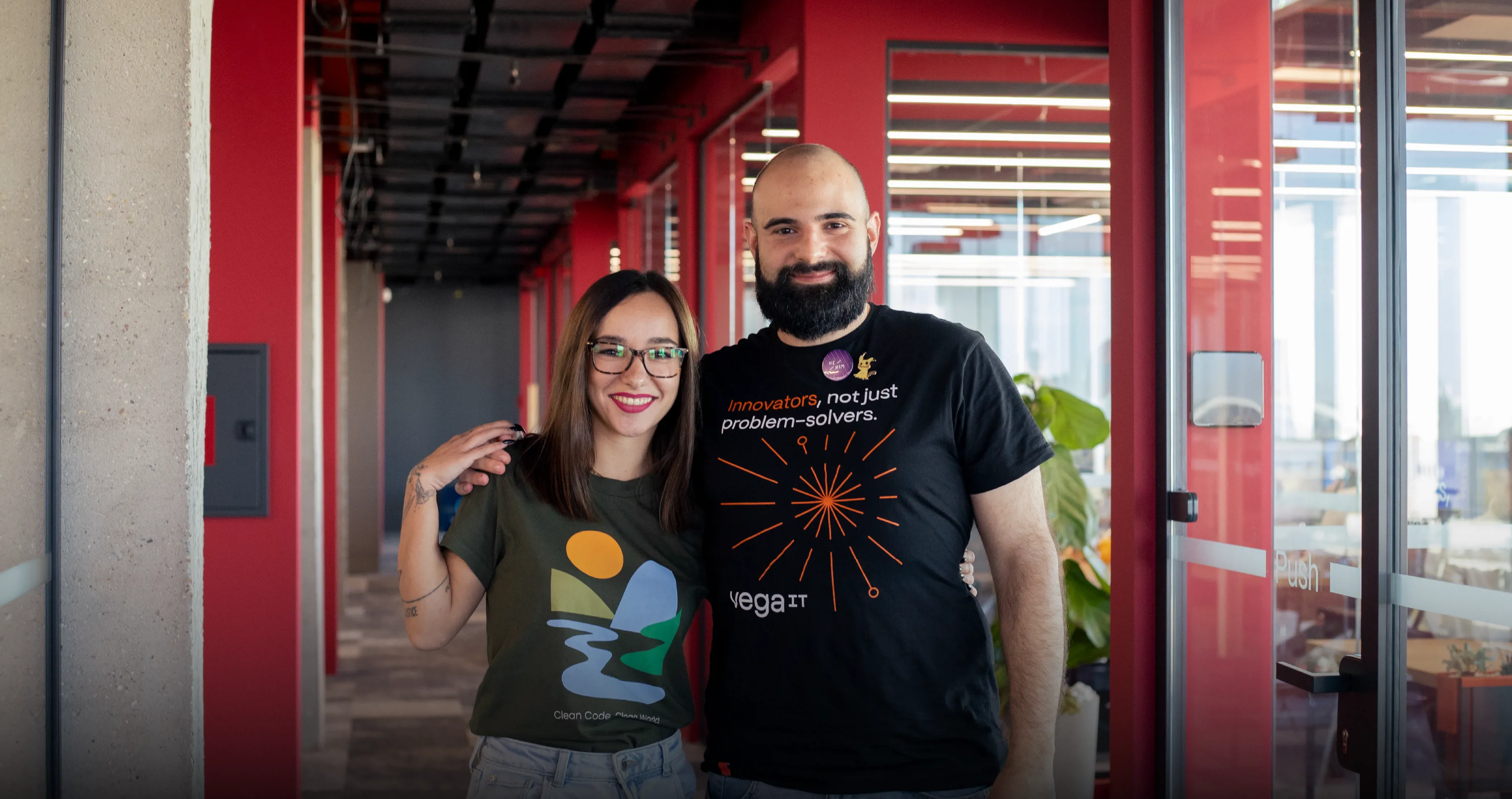
Marija: Let's kick things off with a direct question: What is your go-to answer when someone asks, "Do we really still need to talk about LGBT topics?"
Aleksa: Anyone who asks that is speaking from a position of privilege.
Just in the past few weeks, my organisation, Grupa "IZAĐI," has received support requests from three transgender individuals. One was physically assaulted simply for wearing a rainbow badge, another was thrown out of their home by their parents for being trans, and the third received threats from an ex-partner who is about to be released from prison. Recently, guests at "Mornar," a gay bar in Belgrade, were attacked with tear gas, and we also witnessed a brutal physical assault on a drag queen and her partner. These are the real-world consequences of being visibly LGBTI+ in Serbia. The fact that we don't hear about these incidents every single day is a reflection of the fear within the LGBTI+ community, the hiding and suppressing of our identities, rather than an accurate picture of our society. Living in Serbia often means that we only have each other – other LGBTI+ individuals and our allies. It is crucial that we support and protect one another, but also that we continue educating people and raising awareness that LGBTI+ individuals exist and are an integral part of every society.
Marija: We often hear that "we have the laws, we have the institutions" – so where is the problem? Why does it seem like heterosexual couples take so many things for granted that are still a luxury for queer people?
Aleksa: Serbia still lacks a law on same-sex unions and a law on gender identity. When it comes to how the police, prosecution, and courts treat survivors of homophobia and transphobia, it all depends on how sensitive the individual official on duty happens to be. Discrimination is legally banned, but it’s far from the only form of oppression that marginalised groups face. A well-trained official should know exactly how to guide a survivor with the right questions, encouraging them to communicate their identity clearly so that the LGBT-phobic dimension of the crime doesn't get swept under the rug during legal proceedings (which, unfortunately, happens a lot).
To give you a brief personal story about freedom. In early June, I attended Pride Week in Ljubljana. I was sitting in the patio of a gay cafe right next to City Hall, and another guest started flirting with me. He winked at me a few times and eventually walked over. Even though I actually liked him, I panicked and bailed. Instead of just living freely and being relaxed, my life experience in Serbia has conditioned me to view being approached in public as a safety risk. Freedom didn't just catch me off guard – what many heterosexual people would simply take as a compliment, I instinctively saw as a sign to protect myself from potential homophobes.
People still don't feel free to talk about their personal lives
Marija: What does that actually mean in the workplace?
Aleksa: It means that on a Monday morning, a colleague won't say, "My partner and I went to the beach," but rather, "I went to the beach." It means that people show up to team gatherings alone, even though they’ve been with their partners for years. It means that during job interviews, they are overthinking whether to take off a ring, what to wear, or how to speak.
That mental gymnastics, that constant self-editing before you even step into a room – it’s exhausting. And it directly impacts employee productivity, mental health, and loyalty. Companies that fail to understand this lose people – often their best.
Let's start with conversations about family. We want a workplace where LGBTI+ individuals who live with a partner feel welcome to talk about themselves and their partner as a family, instead of their colleagues assuming that this person doesn't have a family at all. We know that families come in many different forms, and some families face hurdles in their desire to be respected and treated equally. I know someone who broke down in tears after attending a company event with their same-sex partner at their new firm, where they didn't experience discrimination, but rather a warm welcome and support. It doesn't take much to make our workplaces psychologically safe and encouraging. This can lead to a greater sense of belonging to the team and commitment to the company's mission.
Some of the users at our community center would rather stay at inclusive workplaces than accept higher-paying positions at companies that don't communicate inclusivity. And this is a phenomenon that only members of marginalized groups face.
One way anyone can signal goodwill toward LGBTI+ colleagues is by including their gender pronouns in their email signature. This small detail is a visible and powerful sign of understanding that diverse gender identities exist, and it increases the likelihood that colleagues will feel safe coming out to us. An environment where employees feel encouraged to come out can result in stronger team relationships and more successful business outcomes.
Marija: The news we read is still horrifying. How much has the situation actually changed in recent years?
Aleksa: Research by the ILGA association shows that Serbia ranks 29th in Europe when it comes to various aspects of systemic inclusion for LGBTI+ individuals. The study is conducted annually, and this year, inclusivity in Serbia was rated slightly lower compared to the previous year
Homophobia still exists, even in the workplace
Marija: Is the workplace truly safe, and could you break down the concept of microaggressions for us?
Aleksa: Microaggressions are subtle, often unintentional comments or actions that reinforce bias, prejudice, and negative stereotypes about marginalized individuals. For example, showing verbal or non-verbal surprise that a female colleague is a lesbian because she looks "very feminine," or assuming that a male colleague in his 30s or 40s is just unlucky in love, and that’s why no one knows anything about his family. It’s also using slurs like "gay" or "fag" to describe something unfair during a casual coffee break, or questioning a transgender colleague about her old name, or what surgical procedures she has undergone. Although they differ from discrimination, experiencing microaggressions compounds over time, creating a heavy burden for those on the receiving end. Almost all of us make them towards certain social groups, and it’s important to reflect on them and make a personal choice to change. These changes can be supported through internal employee training, giving people the space to verbalize their views and thoughts if they are open to growth.
From time to time, employees should be reminded that they can voice their safety concerns either through a conversation with their manager or via an anonymous channel.
Wins do exist - and we need to be louder about them
We talk about LGBT+ topics because it’s a part of the work we all share - building a workplace where everyone can show up as their whole self, rather than half of who they are.
Queer people don't hide because they are ashamed - they hide because they are afraid. And that fear shrinks with every conversation, with every company that says "you are safe with us," and with every colleague who says "I'm here if you need me."

Inclusion is not a perk we offer, nor is it a bonus on top of a salary.
It is a standard we set - for ourselves, for our colleagues, and for the people who will join our company in the future. Silence is not neutrality; silence is a decision to keep the status quo exactly as it is.
At Vega IT, we strive to ensure that every single employee - regardless of who they love, how they identify, or who they share their life with - knows one thing: you are welcome here, you are safe here, and we see you as a whole person.
We hope to have even more reasons to celebrate and talk about these topics very soon. And we want the right to dignity to stop being a luxury - and to finally become the standard. For every single one of us.